WRITING
In addition to The Feminist Institute (TFI) substack and blog,
I regularly write zines, readers, and articles to explore alternative
archival practices as it pertains to preserving feminist and queer histories.
I wrote these three zines; Personal Digital Archiving, Considering Ethical Digitization Practices, and Building a Feminist Legacy, to accompany TFI’s Pop-Up Memory Lab Workshops in 2023. Click any of the images to download a copy.
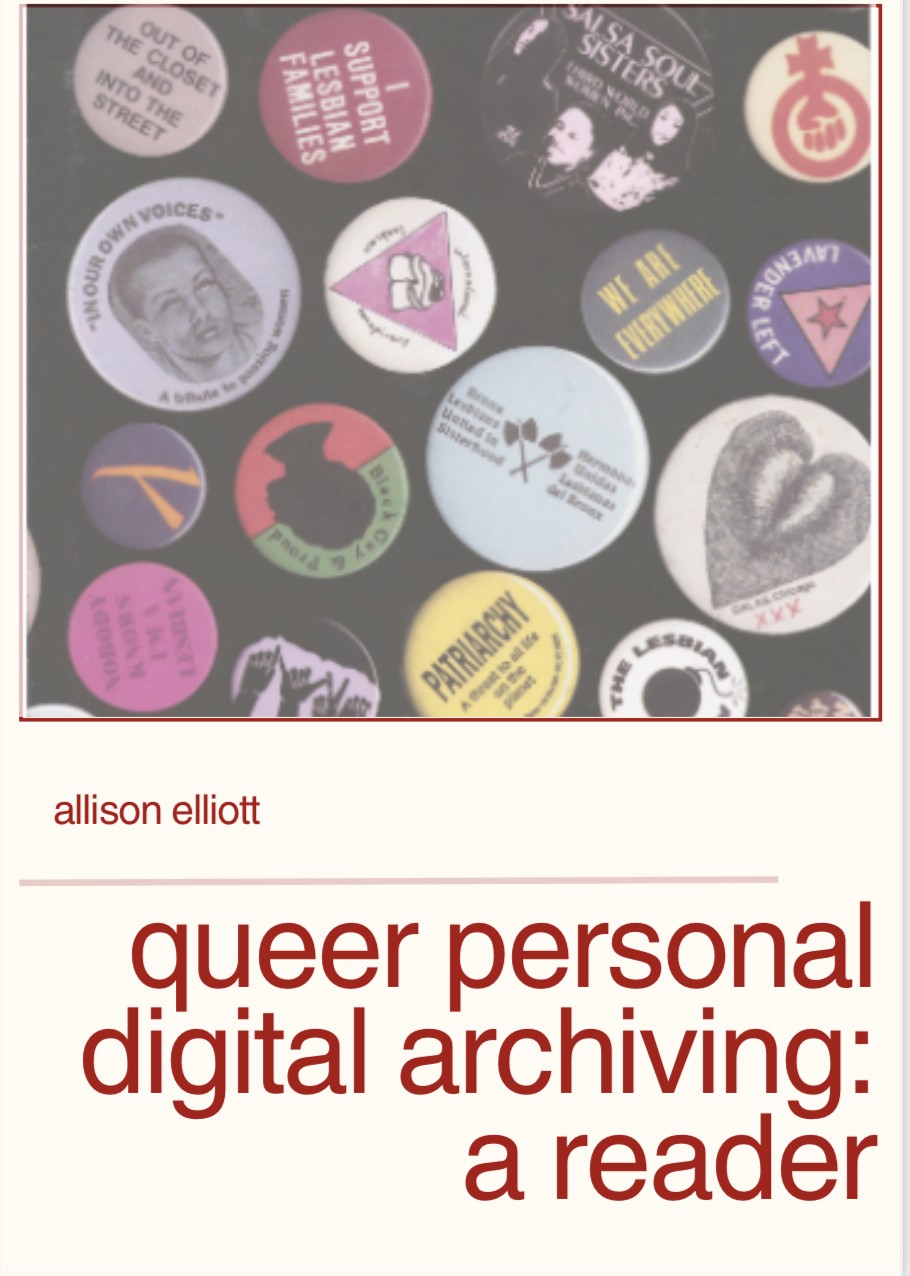
This reader places itself within the archival multiverse to contribute to the ever-growing field of alternative archiving practices and projects. Specifically, this reader focuses on praxis. By looking at the activist-archiving of the ACT UP (AIDS Coalition to Unleash Power) New York Chapter and adjacent projects, the reader explores how personal digital archiving is necessary to build an accurate cultural record, activates the archive, and is a political tool in the present as a vehicle for futurity.
The reader complicates and wrestles with the reality that increased visibility in mainstream media does not increase the material safety and well-being of trans + queer communities while underpinning the importance of autonomous memory sites. Given our current political moment of violent legislation targeting trans communities, this reader reckons with the real threats of symbolic annihilation as an arm of state violence; it posits that personal digital archiving can combat such forms of cultural and historical erasure.
It focuses on discussions of the ethics of onlining once-only community-circulated analog materials, and the remediation within that process. The reader will explore remediation conceptually and as a practice through the retelling of a collaborative zine-making activity done in the CUNY Graduate Center Spring 2023 class Engaged Archives, a graduate seminar that positions community archives as integral to community-based art making. Both the activity and the class use Alex Juhasz’s “VHS Activism Archive,” which holds potent video activism works, many related to HIV/AIDS, from the 1980s to the early 2000s. Finally, the reader exemplifies how personal digital archiving can be understood as a form of community-building and world-making through information activism that creates networks to make life more liveable.
 ALLISON ELLIOTT